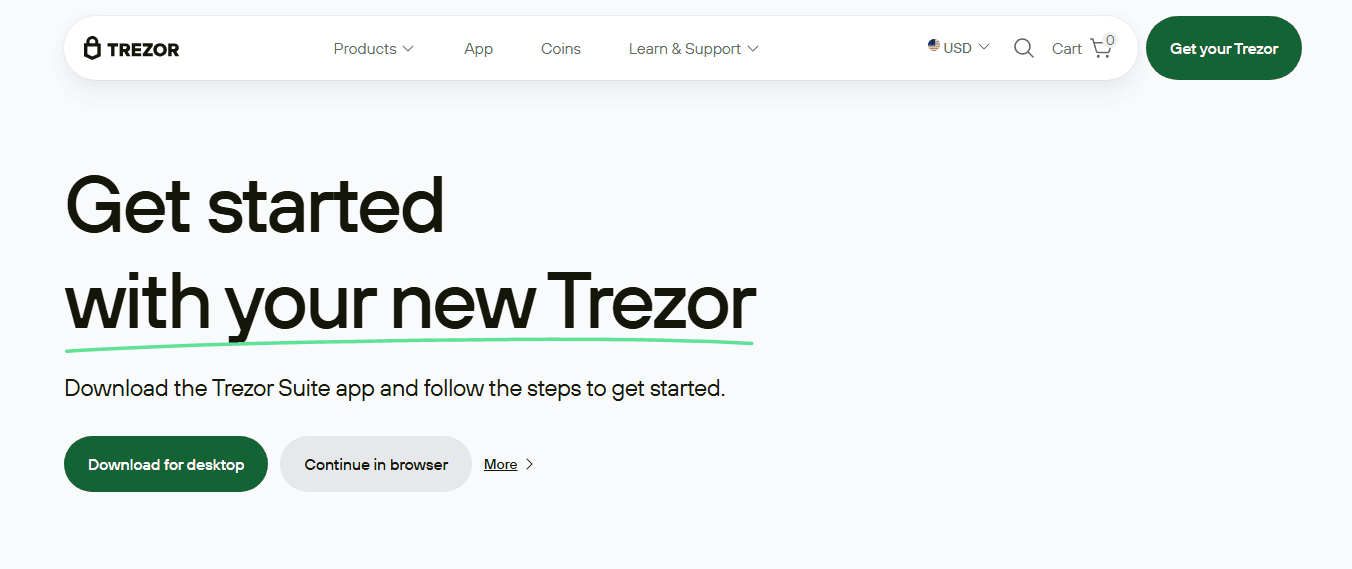
Trezor.io/start: The Complete Guide to Setting Up Your Trezor Wallet
Cryptocurrency security is paramount, and hardware wallets like Trezor offer one of the safest ways to protect your digital assets. Whether you’re a beginner in crypto or an experienced trader, setting up your Trezor wallet correctly ensures that your funds remain secure. This guide will walk you through Trezor.io/start, covering setup, backup, security features, and best practices in detail.
1. Introduction to Trezor Wallet
Trezor is a hardware wallet developed by SatoshiLabs, designed to provide a secure offline environment for managing cryptocurrencies. Unlike software wallets that are connected to the internet, Trezor stores your private keys offline, making it resistant to hacks, malware, and phishing attacks.
There are two main Trezor models:
Trezor One – The original device, compact and secure.
Trezor Model T – The advanced model with a touchscreen, supporting more cryptocurrencies and advanced features.
Trezor wallets support over 1,000 cryptocurrencies, including Bitcoin (BTC), Ethereum (ETH), Litecoin (LTC), and many ERC-20 tokens.
2. Why Use Trezor.io/start
The official Trezor setup portal, Trezor.io/start, is your starting point to initialize your device safely. Using this official website ensures that:
You download genuine Trezor Suite software.
You avoid phishing attacks or fake downloads.
You can follow step-by-step instructions for device setup.
Visiting Trezor.io/start is the first step to securing your crypto investments.
3. Before You Begin
Before starting the setup process, ensure the following:
3.1 Verify Your Device
Always purchase Trezor wallets from official sources. Check the packaging for:
Tamper-evident seals
No signs of previous use
Never buy a Trezor from an untrusted third-party seller.
3.2 Prepare Your Computer
Use a clean, malware-free computer to set up your wallet. Update your operating system and browser to the latest version. Trezor works best with:
Google Chrome
Firefox
Edge
3.3 Keep Backup Tools Ready
You’ll receive a recovery seed card with your device. Keep a pen handy for writing down your 24-word recovery phrase. This is your ultimate backup and the only way to restore your wallet if your device is lost or damaged.
4. Step-by-Step Guide: Trezor.io/start
Here’s how to set up your Trezor wallet safely:
4.1 Connect Your Trezor Device
Go to Trezor.io/start.
Select your Trezor model (One or Model T).
Download and install Trezor Suite, the official desktop app.
Connect your Trezor device to your computer via USB.
The device will light up and prompt you to begin the setup.
4.2 Initialize Your Device
Upon connecting, Trezor Suite will ask you to:
Create a new wallet – This generates a new private key and recovery seed.
Recover an existing wallet – If you have a recovery phrase from a previous wallet.
For most new users, choose Create a new wallet.
4.3 Set Up a PIN
A PIN adds an extra layer of security. Trezor devices use a unique on-device PIN entry:
Enter a PIN directly on your Trezor screen.
The PIN positions change randomly on the screen for each login.
Even if someone watches your computer, they cannot guess your PIN.
Choose a strong PIN, ideally 6–9 digits, avoiding obvious combinations like 1234 or 0000.
4.4 Write Down Your Recovery Seed
The recovery seed is a 24-word phrase generated by your Trezor. It is critical:
Write the words in the exact order on the provided recovery card.
Never store your seed digitally (e.g., on your computer or phone).
Do not take a picture of it.
This seed can restore your wallet if the Trezor device is lost, stolen, or damaged.
4.5 Verify Your Recovery Seed
Trezor Suite will prompt you to verify your recovery seed by selecting words in the correct order. This step ensures that you recorded your seed accurately.
4.6 Access Your Wallet
Once setup is complete:
Trezor Suite will display your wallet dashboard.
You can now send and receive cryptocurrency securely.
Explore features like portfolio overview, transaction history, and account settings.
5. Sending and Receiving Crypto
5.1 Receiving Funds
Click Receive in Trezor Suite.
Choose the cryptocurrency you want to receive.
Copy the wallet address or scan the QR code.
Share this address with the sender.
Always verify the address on your Trezor device screen, not just your computer, to prevent malware manipulation.
5.2 Sending Funds
Click Send in Trezor Suite.
Enter the recipient’s address and the amount.
Confirm the transaction details on your Trezor device.
Trezor will require physical confirmation to authorize the transaction, adding an extra layer of security.
6. Trezor Security Features
Trezor wallets offer multiple security layers:
6.1 PIN Protection
Prevents unauthorized access even if someone has your device.
6.2 Passphrase Support
An optional passphrase can be added to your recovery seed for enhanced security.
6.3 Recovery Seed
Your 24-word phrase ensures that you always have control of your funds.
6.4 Tamper-Proof Hardware
Trezor devices are designed to resist tampering and physical attacks.
6.5 Two-Factor Authentication
Trezor can also act as a hardware security key for 2FA on compatible services.
7. Best Practices for Trezor Users
Never share your recovery seed – No one, not even Trezor support, should ever ask for it.
Store recovery seed offline in a safe location.
Regularly update firmware – Trezor releases updates to enhance security and functionality.
Verify URLs – Always access Trezor.io directly; avoid clicking links from emails or social media.
Test with small amounts first – Before sending large transactions, confirm that small transactions work correctly.
8. Troubleshooting Common Issues
8.1 Device Not Recognized
Ensure the USB cable is functioning.
Try a different port.
Restart Trezor Suite.
8.2 Forgot PIN
Use your recovery seed to restore the wallet on the same or a new device.
8.3 Lost Recovery Seed
Unfortunately, without your seed, funds are unrecoverable. Always back it up securely.
8.4 Firmware Update Failed
Retry with a different USB port or cable.
Ensure your internet connection is stable.
9. Advanced Features
9.1 Multiple Accounts
Trezor Suite allows you to manage multiple accounts for different cryptocurrencies.
9.2 Shamir Backup (Model T)
An advanced backup method splitting your recovery seed into multiple shares for extra security.
9.3 Staking and DeFi
Some cryptocurrencies can be staked or used in decentralized finance (DeFi) directly via Trezor Suite integrations.
10. Using Trezor with Third-Party Wallets
Trezor can be integrated with other wallets like Electrum, MyEtherWallet, and MetaMask. This allows for advanced transaction management while keeping your private keys offline.
11. Keeping Your Trezor Secure
Do not lend your device – Only the owner should use it.
Beware of phishing sites – Always verify domain names.
Keep firmware updated – Regular updates patch security vulnerabilities.
Use a strong PIN and optional passphrase for extra protection.
12. Conclusion
Setting up your Trezor wallet through Trezor.io/start ensures maximum security for your digital assets. By carefully following setup instructions, safely storing your recovery seed, and following best practices, you can protect your cryptocurrency against hacks, malware, and theft.
Trezor provides a reliable, user-friendly, and highly secure way to manage your crypto assets. With the knowledge from this guide, you’re ready to start safely sending, receiving, and storing cryptocurrencies.